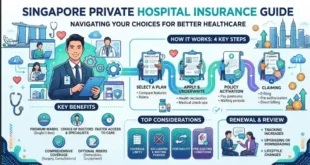
Singapore insurance for specialist treatment works like this: your Integrated Shield Plan pays for hospital care, and most plans cover specialist outpatient visits only up to a yearly limit, often after a deductible or co-payment. A referral from a polyclinic or GP usually keeps the bill lower. This guide covers the plan types, the real limits, and the steps to file a claim.
What specialist treatment cover really means
Specialist treatment means care from a doctor who focuses on one area — a cardiologist, an oncologist, a dermatologist. In Singapore, you reach them through a referral or by booking directly. The bill splits into two parts: the consultation and tests, and any procedure or hospital stay that follows.
Your MediShield Life covers the hospital part. Your Integrated Shield Plan, sold by private insurers, adds a private hospital option and higher ward classes. Specialist outpatient care sits in a separate bucket, and that’s where the confusion starts.
The common misconception: people assume “full cover” means every specialist visit is paid. It doesn’t. Most Integrated Shield Plans cap outpatient specialist benefits at a yearly amount, and you pay a share of each bill. MediShield Life itself is built for large hospital bills, not routine clinic visits. For the exact limits on your plan, check your policy document or the insurer’s benefit schedule — the figures change between plans and tiers.
How to see a specialist without overpaying
- Get a referral first. Ask your GP or polyclinic for a referral letter. A polyclinic referral to a public hospital specialist gets you the subsidized rate, which is lower than the private rate for the same doctor.
- Check your plan’s specialist panel. Call your insurer or open the app and confirm which specialists are on the panel. Going outside the panel usually means a smaller claim or none at all.
- Ask for the estimated bill before you book. Request the consultation fee, the test fees, and the procedure cost in writing. Compare that total against your yearly outpatient limit.
- Confirm the pre-authorization rule. For planned surgery or a major procedure, most insurers want approval before admission. Submit the form at least 5 working days ahead.
- Keep every receipt and the referral letter. You’ll need the original bill, the receipt, and the diagnosis code when you claim.
- File the claim within the window. Most insurers set a deadline from the date of discharge or treatment — check yours, because late claims get rejected.
- Pay first, claim after, for outpatient visits. Most clinics collect payment at the counter and you claim back later. For hospital admissions, ask about the panel’s cashless option.
The one judgement call that matters: whether to go public or private for the same condition. Public gives you a lower bill and a longer wait. Private gives you speed and choice, at two to three times the cost. If your plan’s yearly specialist limit is low, the private route can leave you paying most of the bill yourself.
Key numbers and settings at a glance
The table below shows the main situations you’ll face. Treat the “how long” column as a typical range, not a promise — waiting times move with demand and your case’s urgency.
| Situation | What to use | How long | What to watch for |
|---|---|---|---|
| First visit, public hospital, subsidized | Polyclinic referral letter | Wait of weeks to a few months | Subsidy only applies with a valid referral |
| First visit, private specialist | Direct booking, panel doctor | Usually days | Panel status decides if you can claim |
| Planned surgery | Pre-authorization from insurer | Submit 5+ working days ahead | No approval means a reduced payout |
| Day surgery, panel hospital | Cashless admission | Same day | Confirm the panel covers that procedure |
| Emergency admission | Nearest A&E, any hospital | Immediate | Tell the insurer within the notice period |
| Follow-up visits | Same specialist, same panel | Per your treatment plan | Each visit counts against the yearly limit |
| Overseas treatment | Your plan’s emergency benefit only | Varies | Elective care abroad is usually excluded |
What separates a smooth claim from a rejected one
Experienced claimants do the paperwork before treatment, not after. They get the referral letter dated, they photograph every receipt the same day, and they save the doctor’s memo with the diagnosis written on it. When a claim form asks for a diagnosis code, they ask the clinic to fill it in rather than guessing.
They also check the order of events. A pre-authorization must come before admission. A referral must come before the specialist visit, not after. If you reverse that order, the insurer can treat the visit as self-referred and pay less.
Partway through treatment, they check the running total against the yearly limit. If the limit is close, they ask the specialist whether a test can wait until the next policy year or be done at a subsidized clinic instead. That single question often saves more than any claim.
What they leave alone: they don’t switch specialists mid-treatment without telling the insurer, and they don’t split one condition across two claims to dodge a limit. Insurers read the dates.
Prepare before you book
Get the referral, confirm the panel, and ask for the estimate in writing. Three phone calls now beat three months of appeals later.
Check the running total
Add up what you’ve claimed this year. When you’re near the limit, ask what can move to next year or to a subsidized setting.
Common problems and quick fixes
Most problems trace back to one of a few causes. The table matches what you notice to what it usually means, and the first thing to do about it.
| What you notice | What it usually means | What to do first |
|---|---|---|
| Claim rejected as “not panel” | Specialist wasn’t on your insurer’s panel | Ask the insurer for the panel list and rebook |
| Only part of the bill paid | Yearly specialist limit reached | Check the remaining balance and appeal if wrong |
| Claim needs more documents | Missing referral or diagnosis code | Ask the clinic to complete the form |
| Cashless admission refused | No pre-authorization on file | Pay first, then submit the claim with the bill |
| Waiting months for public slot | High demand for that specialty | Ask about a private slot or another hospital |
The rules that apply
MediShield Life is run by the Central Provident Fund Board, and it covers all Singapore Citizens and Permanent Residents for life, including pre-existing conditions. It pays for subsidized hospital care and selected outpatient treatments, with deductibles and co-insurance you pay yourself. Integrated Shield Plans are private add-ons regulated by the Monetary Authority of Singapore, and each insurer sets its own panel, limits, and pre-authorization rules.
Two rules catch people out. First, pre-existing conditions are excluded or priced higher under most Integrated Shield Plans, even though MediShield Life covers them. Second, Medisave can pay for some outpatient scans and treatments under the Medisave400 and Medisave700 schemes, but only for approved conditions and up to a yearly cap — check the Ministry of Health website for the current list, because it changes.
If your case involves a dispute over a rejected claim, the Financial Industry Disputes Resolution Centre handles complaints against insurers. For treatment decisions themselves, your specialist is the right person to ask.
Keeping it working afterwards
Once treatment ends, keep the file together: the referral letter, every bill, every receipt, the discharge summary, and the claim reference number. Store them in one folder, paper or digital, and keep them for at least the period your insurer states for audits.
Check your yearly specialist limit again before the next policy year starts. If you used most of it, that’s the sign to review your plan tier at renewal. If your condition is ongoing, ask your specialist to write a memo confirming it’s a continuation of the same treatment — that helps future claims.
At renewal, read the benefit schedule again. Insurers do update panels and limits, and a doctor who was on the panel last year may not be this year.
When this approach isn’t right for you
If your condition is rare or needs a treatment not available in Singapore, a local specialist claim won’t help. Ask your doctor about referral abroad and check what your plan’s emergency overseas benefit actually covers.
If you have no Integrated Shield Plan and only MediShield Life, the private specialist route will cost you far more than you can claim. Go through a polyclinic referral instead.
If your bill is small — a single consultation with no tests — claiming may not be worth the paperwork, especially if a deductible applies. Paying directly and keeping your no-claim discount intact can cost you less overall. Check your plan’s no-claim terms before you decide.
Frequently asked questions
Does MediShield Life cover specialist outpatient visits?
Partly. It covers selected outpatient treatments, such as dialysis and some cancer drugs, with a deductible and co-insurance. Routine specialist consultations are usually not covered. Check the Ministry of Health’s current benefit list for the exact treatments included, because the list is updated over time.
How long does an insurance claim take to pay out?
Typically 7 to 14 working days after the insurer receives a complete claim. If documents are missing, it takes longer. The clock starts from the day the insurer has everything, not the day you posted the form, so send all documents together.
Can I see a private specialist without a referral?
Yes, you can book directly. But without a referral, some plans pay a lower amount or treat it as self-referred. Check your policy first. If you want the full panel rate, get the referral letter dated before the visit.
Is it safe to delay specialist treatment to save money?
No. Delaying care for a serious symptom can make the condition harder and more expensive to treat later. If cost is the issue, ask about a subsidized clinic or a payment plan instead of waiting. Speak to your doctor about urgency.
What happens if my claim is rejected?
You can appeal. Ask the insurer in writing for the reason, then send the missing document — usually the referral letter or diagnosis code. If the appeal fails, the Financial Industry Disputes Resolution Centre handles complaints against insurers and can review your case.
How much does a specialist visit cost in Singapore?
It varies widely. A subsidized public hospital visit costs far less than a private specialist, and the gap can be two to three times. Ask the clinic for its fee schedule before you book, and compare it against your plan’s yearly outpatient limit.
Can I claim for a specialist my insurer doesn’t list?
Usually only at a reduced rate, or not at all. Panel status decides your payout. If your preferred doctor isn’t on the panel, call the insurer and ask whether an exception can be made before you book the appointment.
Conclusion
The system rewards people who plan the paperwork before the appointment. Get the referral, confirm the panel, keep every receipt, and watch your yearly limit as the year goes on. That’s what keeps a specialist bill from turning into a surprise.