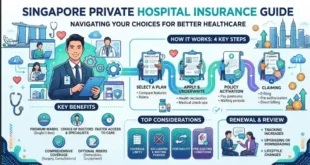
Planning surgery at a private hospital in Singapore comes down to four things: picking a surgeon who holds admitting rights at that hospital, getting a clear fee quote in writing, checking what your insurance or MediSave will actually cover, and booking a date that leaves room for pre-surgery tests. Most people can finish the paperwork in two to four weeks. This guide covers the steps, the numbers to compare, and the points where you should stop and ask a professional.
What private surgery in Singapore really means
Private hospital surgery in Singapore means a procedure done at a privately run hospital, by a doctor you choose yourself. You pay the full bill first, then claim back from your insurer or, in some cases, from MediSave. The hospitals people mean are Mount Elizabeth, Gleneagles, Raffles, Parkway East, Thomson Medical and Farrer Park.
You go this route for speed, choice of surgeon, and a room to yourself. Public hospitals are cheaper, but waits for non-urgent surgery can run into months. That trade-off is the whole reason this option exists.
The misconception is that the hospital sets the surgeon’s fee. It doesn’t. In most cases the surgeon bills you separately, and the hospital bills you for the room, the theatre and the nursing. Two bills, two payees. Ask for both before you commit.
One rule worth knowing early: MediSave can be used at private hospitals, but the withdrawal limits are lower than at public ones. The Ministry of Health publishes those limits, and they change, so check its current page rather than trusting an old number.
How to plan private hospital surgery in Singapore
- Get a referral or shortlist two or three surgeons. Ask your polyclinic doctor, or check the hospital’s own doctor directory. Confirm each surgeon holds admitting rights at the hospital you want — not every surgeon can operate everywhere.
- Book the first consult, usually 30 to 45 minutes. Bring your scans, your medication list and your insurance card. Ask directly: what procedure, what approach, how many nights, and what could go wrong.
- Request a written fee quote. Ask for the surgeon’s fee, the anaesthetist’s fee, and the hospital’s estimate as three separate lines. A verbal range isn’t a quote.
- Send the quote to your insurer before you book. Ask for a letter of guarantee or a pre-authorization. This usually takes 3 to 7 working days. Without it, you may pay the whole bill upfront and claim back later.
- Do the pre-surgery tests, normally within 30 days of the operation date. Bloods, an ECG if you’re over 40 or have heart risk, and a chest X-ray if asked. Your surgeon sets the list.
- Stop and adjust medications on your surgeon’s instructions. Blood thinners, some diabetes drugs and certain supplements need to stop days before. Never decide this yourself.
- Confirm the date, the room class and who pays what. Get the admission letter in writing, with the arrival time and the fasting instructions.
- Arrange the aftercare before you go in — who drives you home, who’s around for the first 48 hours, and where you’ll get the follow-up review.
The judgement call that matters most is step 4. People who lock in a date before the insurer confirms coverage are the ones who end up funding the whole bill themselves and arguing about it later.
If your surgery needs a specialist who only works at one hospital, or if you’re considering treatment abroad, that’s outside what you can plan on your own — talk to the hospital’s international patient office and your insurer’s case manager.
Key numbers at a glance
These are the figures and settings people come back to. Treat them as planning ranges, not promises — your surgeon’s quote overrides all of them.
| Situation | What to use | How long | What to watch for |
|---|---|---|---|
| First specialist consult | Hospital doctor directory or polyclinic referral | 30–45 minutes | Ask for the fee quote at this visit |
| Insurance pre-authorization | Your insurer’s case manager | 3–7 working days | Don’t book the date before this clears |
| Pre-surgery tests | Surgeon’s order list | Within 30 days of surgery | Fasting needed for some blood tests |
| Standard day surgery | Day ward, no overnight | Same-day discharge | You still need someone to drive you home |
| One-night stay | Single room, private hospital | Admit morning, discharge next day | Room class changes the bill a lot |
| MediSave claim | Private hospital limits | Filed at admission | Limits are lower than public hospital rates |
| Follow-up review | Same surgeon | 1–2 weeks after discharge | Ask if the fee is included or extra |
What separates a smooth surgery from a messy one
The people who sail through this prepare in a boring, specific way. They get everything in writing before money moves, and they keep one folder — digital or paper — with the quote, the pre-authorization letter, the admission letter and the test results. When a nurse or a cashier asks a question at admission, the answer is in the folder.
The order they work in
They confirm the surgeon first, then the hospital, then the insurer, then the date. Doing it in that order means each step locks the next one down. Booking a date first and sorting coverage after is the reverse, and it’s where the stress comes from.
What they check partway through
Two days before admission, they call the hospital’s admissions desk and confirm three things: the room class on the booking, the arrival time, and the estimated total. Catching a room-class upgrade before you’re in the bed is much easier than disputing it after.
What they leave alone
They don’t shop purely on the lowest quote. A surgeon’s fee that’s cheaper means little if the hospital estimate is higher, or if the surgeon doesn’t operate at the hospital your insurer prefers. Compare the total, not the headline.
Common problems and quick fixes
Most snags here are paperwork, not medicine. The table below matches what you notice to what usually causes it and the first thing to do.
| What you notice | What it usually means | What to do first |
|---|---|---|
| Insurer won’t confirm cover | Pre-authorization wasn’t submitted, or the diagnosis code is missing | Call your insurer’s case manager with the quote and procedure code |
| Bill is higher than the quote | Room class changed, or extra nights were added | Ask the hospital billing desk for an itemized breakdown |
| MediSave covers less than expected | Private hospital withdrawal limits are lower than public rates | Check the current limits on the Ministry of Health website |
| Surgery date moved | Surgeon’s schedule or theatre availability changed | Ask for the new date in writing, then re-confirm with your insurer |
| Confusing instructions before fasting | Two sets of advice from two departments | Follow the surgeon’s written instruction, and call the clinic if unsure |
The rules and limits that apply
MediSave withdrawals for surgery at a private hospital are capped, and the caps are lower than for a public hospital. The Ministry of Health publishes these limits and updates them, so read the current version before you budget. The Central Provident Fund Board runs MediSave itself.
Integrated Shield Plans and riders are regulated by the Monetary Authority of Singapore, and the Ministry of Health sets the rules on what riders may and may not cover. If you bought a rider after the 2018 changes, it won’t cover the deductible or the co-insurance on a standard plan.
Private hospitals must be licensed under the Private Hospitals and Medical Clinics Act, which is administered by the Ministry of Health. If you have a complaint about care or billing that the hospital won’t resolve, the Ministry of Health and the Singapore Medical Council are the bodies to approach — not the hospital’s own feedback form alone.
Keeping things on track after discharge
Keep the discharge summary, the itemized bill and every receipt in one place. You’ll need all three for the insurance claim, and insurers often ask for the discharge summary separately from the bill. File the claim within the window your insurer sets — check your policy, because it varies by insurer and by plan.
Follow the wound-care and medication instructions exactly as written. If you were given a follow-up date, keep it; that review is when the surgeon checks healing and removes stitches or staples if needed.
Know the signs that mean call the clinic now, not at the next appointment: fever, wound discharge, pain that’s getting worse instead of better, or shortness of breath. Your discharge papers list the specific numbers and symptoms for your procedure — read them the day you get home, not the day you feel unwell.
When private surgery isn’t the right choice
If the wait at a public hospital is acceptable for your condition, go public. The subsidy is real, MediSave limits are higher, and for many procedures the surgical outcomes are the same. Ask your doctor whether your condition is urgent or can wait.
If your insurer won’t pre-authorize and you can’t cover the full bill, don’t proceed on hope. Either delay until cover is confirmed, or ask about a public hospital or a restructured hospital with a shorter private-rate queue.
If the surgery is cosmetic and not medically necessary, MediSave can’t be used at all, and most Integrated Shield Plans won’t cover it either. Budget for the full amount yourself.
Frequently asked questions
Can foreigners have surgery at a private hospital in Singapore?
Yes. Private hospitals treat international patients, and most have an international patient office that handles visas, appointments and estimates. You’ll usually pay a deposit before admission and settle the balance at discharge. Travel insurance rarely covers planned surgery, so confirm your own coverage in writing first.
How long does it take to plan surgery at a private hospital?
Two to four weeks is typical for non-urgent surgery, assuming your insurer confirms cover. The insurer’s pre-authorization alone takes 3 to 7 working days. Urgent cases move much faster, often within days, but the paperwork is then handled at admission rather than before.
Is private hospital surgery in Singapore safe?
Private hospitals here are licensed and inspected under the Private Hospitals and Medical Clinics Act, administered by the Ministry of Health. Safety depends far more on your surgeon’s experience with your specific procedure than on the building.
How much does private hospital surgery cost in Singapore?
There’s no single figure — it varies by procedure, surgeon, hospital and room class. A day procedure and a multi-night operation with implants sit in completely different ranges. Ask for a written quote broken into surgeon, anaesthetist and hospital fees, then compare totals rather than headline numbers.
What happens if my surgery costs more than the quote?
The hospital bills you the difference, and you claim it back from your insurer if your plan covers it. An itemized breakdown is your right — request it before you pay anything you don’t recognize.
Can I use MediSave for private hospital surgery?
Yes, but the withdrawal limits are lower than at public hospitals, so it usually covers only part of the bill. The Ministry of Health publishes the current limits. Check them before you budget, and confirm with the hospital’s billing desk what they’ll submit on your behalf.
How long before surgery do I need to stop eating?
Your surgeon or anaesthetist sets this, and it’s usually from midnight the night before for a morning operation. Follow their written instruction exactly — not a general rule you found online. If you take daily medication, ask which ones to take with a sip of water and which to skip.
Conclusion
Planning this well is mostly about order and paperwork: surgeon first, then hospital, then insurer, then date. Get the quote, the pre-authorization and the admission letter in writing, keep them in one folder, and read your discharge instructions the day you get home. Everything else follows from that.