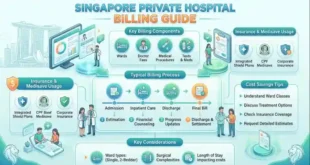
A Singapore private hospital insurance guide starts with one number: you need an Integrated Shield Plan (IP) with a private hospital rider, and the rider is where most of the cost sits. Without the rider, your IP still pays private hospital bills — but you cover the deductible and the 10% co-insurance yourself. This guide covers the tiers, the riders, the waiting periods and the fine print that decides what you actually get back.
What Singapore private hospital insurance covers
An Integrated Shield Plan is a private insurance plan that sits on top of MediShield Life, the basic national health insurance scheme run by the CPF Board. You keep MediShield Life — you can’t drop it — and the IP adds a higher claim limit, better ward class, and the option of private hospitals.
People buy IPs for three reasons: a private room, a doctor of their own choosing, and shorter waits. The plan pays the hospital directly for covered bills, up to the limits in your policy.
The misconception is simple. Many people think “I have insurance, so I pay nothing.” That’s wrong. Every IP carries a deductible — a fixed amount you pay first each policy year — and co-insurance, a percentage of the rest.
A rider can cover most of that gap, but riders cost extra and most now carry a minimum co-payment you can’t remove. The Ministry of Health (MOH) publishes the current rules on riders, and you should read its own guidance rather than a summary.
How to choose and use your plan
- Check your current cover first. Log in to the CPF website and look at your MediShield Life status. If you already hold an IP, note the insurer, the ward class and the rider. This takes about 10 minutes and stops you buying something you already have.
- Decide your ward class. Public A ward, public B1 ward, or private hospital. Private costs the most in premiums. Pick the class you’d genuinely accept, not the one that sounds safest.
- Compare riders on the co-payment, not the premium. Since 2021, MOH requires new riders to carry a minimum co-payment of at least 5% of the bill. Ask each insurer for that figure in dollars on a $20,000 bill.
- Check the waiting period. Most IPs apply a 30-day waiting period for ordinary illness and exclude pre-existing conditions, typically for 12 months. Accident cover usually starts straight away.
- Confirm the panel. Private hospital plans often pay more at panel doctors. Ask for the panel list and check your own specialist is on it.
- Pay the premium. You can use MediSave for part of it, up to the withdrawal limits MOH sets for your age band. The rest is cash.
- Keep the policy documents. When you claim, the hospital needs your policy number and your rider details at admission, not after.
The judgement call that separates a good outcome from a bad one is the rider. A rider that removes almost all co-payment sounds best, but it costs the most and still leaves you a cash co-payment. A cheaper rider leaves more of the bill with you. Match the rider to the bills you could actually face, not to the smallest possible number.
If your case involves a dispute over a claim, or a pre-existing condition the insurer won’t cover, that’s past do-it-yourself territory. Go to the insurer’s own appeals process first, then the Financial Industry Disputes Resolution Centre (FIDReC).
Key numbers at a glance
The figures below are the ones people come back for. Premiums rise with age, so the amount you pay at 40 isn’t the amount you pay at 65. Check your own quote with the insurer, and check the MediSave withdrawal limits on the CPF Board’s site.
| Situation | What to use | How long | What to watch for |
|---|---|---|---|
| Young and healthy, public A ward | IP with public A rider | Premiums rise every 5 years | Rider co-payment is cash, not MediSave |
| Private hospital, own doctor | IP with private hospital rider | 12-month wait on pre-existing conditions | Panel vs non-panel payout gap |
| Pre-existing condition | IP with exclusion, or stay on MediShield Life | Exclusion usually permanent | Insurer may load the premium |
| Age 60 and over | Review rider against premium | Renews yearly | Premiums climb fastest here |
| Frequent overseas travel | IP plus travel medical cover | Per trip | IP covers little outside Singapore |
What experienced buyers get right
The people who get clean claims do three things before they ever need the hospital. They read the exclusion list line by line, they keep the rider’s co-payment in a separate savings pot, and they re-check the panel every year because it changes.
They also work in a set order. First they confirm the ward class they’d accept. Then they pick the rider to match. Only then do they compare insurers on price. Doing it the other way round — chasing the cheapest premium first — usually ends with a rider that leaves a big bill.
Partway through, they check one thing: what the plan pays on a real bill from the hospital they’d actually use. A private bill and a public A bill test a policy very differently. Ask the insurer for both illustrations.
What they leave alone matters too. They don’t switch plans every year to chase a small premium saving, because a new plan restarts the waiting period and the pre-existing condition clock. A gap in cover is the expensive mistake here — it can cost you the whole claim, not just the premium difference.
Preparing before you need it
Keep the policy number, the rider details and the insurer’s hotline in one place. Hospitals ask at admission, and hunting for a document in a corridor is a bad start. Tell your family where it is.
Checking the exclusions
Read the exclusion page twice. Congenital conditions, cosmetic treatment and injuries from certain activities are commonly excluded. If an exclusion covers something you might need, ask the insurer in writing before you sign.
Common problems and quick fixes
| What you notice | What it usually means | What to do first |
|---|---|---|
| Claim paid far less than expected | Deductible and co-insurance applied | Ask the insurer for the breakdown in dollars |
| Hospital bill not covered at all | Treatment on the exclusion list | Check the exclusion page, then appeal in writing |
| Premium jumped sharply | You moved into a higher age band | Ask for the age-band table and compare riders |
| Specialist not covered fully | Doctor is outside the panel | Ask if a panel doctor can take the case |
| Claim delayed past a month | Missing documents from the hospital | Request the itemized bill and submit it yourself |
The rules that apply
MediShield Life is run by the CPF Board and covers all Singapore Citizens and Permanent Residents for life, regardless of age or health. You can’t opt out. Integrated Shield Plans are regulated by the Monetary Authority of Singapore (MAS), and the product terms must follow MOH rules.
Two rules matter most. First, since 2021 MOH requires new IP riders to carry a minimum co-payment — you pay at least part of every large bill in cash. Second, insurers may exclude a pre-existing condition or charge more, and they can also decline the application. The exact co-payment percentage and the MediSave withdrawal limits change, so read the current figures on the MOH and CPF Board websites rather than trusting an old brochure.
Where a claim is refused and you believe the refusal is wrong, FIDReC handles disputes between consumers and insurers. That’s the proper route — not a letter to the insurer alone.
Keeping it working afterwards
Once the plan is in place, the work is small but regular. Store the policy document and the rider schedule together, in paper and as a photo on your phone. Note the renewal date, because a missed premium can lapse the policy and restart your waiting period.
Review the plan when your life changes: a new job, a move, a new baby, or a diagnosis. Each one can change what the plan pays. Check the panel list once a year, since doctors move on and off it.
The sign that a review is due is simple: your premium has gone up and you don’t know why. That’s the moment to ask the insurer for the age-band table and the current rider terms.
When a different approach fits better
An IP with a private hospital rider is the wrong choice in a few cases. If your budget is tight and your main worry is a large public hospital bill, a public A ward plan with a basic rider covers you at far lower cost. If you’re near retirement and the premiums are straining your income, dropping to a lower ward class keeps cover alive instead of lapsing it.
If you have a serious pre-existing condition that insurers will exclude, staying on MediShield Life alone plus a personal savings buffer often beats paying for a plan that won’t cover your main risk. And if you’re only in Singapore short-term, check whether your home country’s cover already handles you here before buying a local plan.
Frequently asked questions
Can I use MediSave to pay for private hospital insurance?
Yes, but only up to the withdrawal limits MOH sets for your age band, and only for the IP and approved rider. Anything above that limit is cash. The limits change, so check the CPF Board’s current published figures before you budget.
How long do I have to wait before I can claim?
For most new IPs, 30 days for ordinary illness and 12 months for pre-existing conditions. Accident cover usually starts immediately. The exact periods are printed in your policy’s waiting period section, and they restart if you switch to a new plan.
Is it safe to drop my rider to save money?
It’s safe in the sense that your IP still works without it. But you’ll pay the deductible and co-insurance yourself, which on a private hospital bill can run into thousands. Run the numbers on a realistic bill before you cancel.
What happens if I stop paying the premium?
The policy lapses. If you restart later, you may need a new application, and the waiting periods and pre-existing condition rules apply again from day one. A lapse is far more costly than the premium you saved.
Why was my claim refused?
The most common reasons are a treatment on the exclusion list, a condition treated within the waiting period, or incomplete documents. Ask the insurer for the reason in writing, then appeal through its own process, and go to FIDReC if that fails.
How much does a private hospital plan cost?
It depends on your age, the ward class and the rider. Premiums rise with age and are higher for private hospital cover than public. Get a written quote from the insurer with the age-band table attached, because a figure quoted today won’t hold as you get older.
Can I switch insurers without losing cover?
You can apply, but the new insurer assesses you fresh. A condition you’ve developed since your last application may be excluded or charged more. Compare the total cost of switching against staying, including any new waiting periods.
Conclusion
Buy the ward class you’d genuinely accept, match the rider to the bills you could face, and read the exclusion page before you sign — not after. The plan is only as good as the details you checked when you bought it.