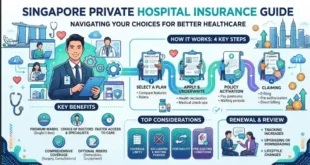
Singapore hospital treatment options run from public restructured hospitals to private specialists, and your route in depends on how urgent the case is. A life-threatening emergency goes straight to any Accident & Emergency (A&E) department — by ambulance or on your own. Everything else starts with a referral, a polyclinic, or a specialist clinic booking. This guide covers the hospital types, the referral paths, the costs to expect, and the rules that apply to foreigners and residents.
What hospital treatment in Singapore actually is
Singapore’s hospital system splits into three tracks: public restructured hospitals, private hospitals, and specialist outpatient clinics (SOCs) attached to the public hospitals. Public restructured hospitals are government-owned but run like companies — they receive subsidies, and Singapore citizens and permanent residents get those subsidies applied to their bills. Private hospitals charge full market rates with no subsidy.
Treatment here means anything from a same-day consultation to major surgery and inpatient care. The system is built around referrals: for non-emergency care, you usually can’t walk into a specialist clinic and demand an appointment. You need a referral from a polyclinic, a GP, or another doctor first.
The misconception people bring is that public means slow and private means fast. That’s not always true. Public hospitals handle the most complex cases in the country, and their waiting times depend on how urgent your condition is — not on which hospital you picked. A private hospital can be faster for a routine procedure, but it costs far more.
How to get treatment at a Singapore hospital
The path you take depends on whether it’s an emergency. For anything life-threatening — chest pain, difficulty breathing, a serious injury — call 995 for an ambulance or go to the nearest A&E. For everything else, follow the referral route.
- Decide if it’s an emergency. If yes, go to any A&E immediately. A&E departments treat patients in order of severity, not arrival time, so a minor issue can mean a long wait.
- For non-emergency care, start at a polyclinic or GP. A polyclinic visit costs less than a private GP, and a polyclinic can refer you to a public hospital specialist at the subsidized rate.
- Get your referral letter. Ask the doctor to refer you to a specific public hospital’s SOC. The letter names the department you need.
- Book the SOC appointment. The hospital will contact you with a date. Wait times for a first appointment vary by department — some are weeks, some are months, depending on urgency.
- Attend the first consultation. Bring your ID, your referral letter, and any prior medical records or scans. This visit decides whether you need tests, surgery, or ongoing monitoring.
- Complete tests and follow-up. The doctor orders what’s needed, reviews results, and either discharges you back to the polyclinic or keeps you under specialist care.
- For planned surgery, confirm the cost estimate first. Ask for a written estimate before you agree to the procedure. Public hospitals publish subsidized and non-subsidized rates.
The one judgement call that separates a smooth experience from a frustrating one is picking the right entry point. If you go to A&E with a non-urgent problem, you’ll wait hours and still be told to see a specialist later. If you go to a polyclinic for a genuine emergency, you’ll be sent to A&E anyway — and you’ve lost time. Match your entry point to your urgency.
Where a step needs a specialist’s judgement, a licensed surgeon, or equipment most clinics don’t have, that’s the hospital’s job — not something to arrange yourself.
Treatment settings and what to expect
The table below covers the main settings a reader will face. Costs vary by ward class, subsidy status, and procedure, so treat the figures as the shape of the difference, not a quote.
| Situation | What to use | How long | What to watch for |
|---|---|---|---|
| Life-threatening emergency | A&E at any hospital | Immediate triage | You’re treated by severity, not queue order |
| Non-urgent, first visit | Polyclinic or GP | Same day or next day | Ask for a referral letter if you need a specialist |
| Specialist consultation | Public hospital SOC | Weeks to months for first visit | Subsidized rate needs a valid referral |
| Planned surgery, public | Restructured hospital | Scheduled weeks ahead | Confirm ward class and subsidy before admitting |
| Planned surgery, private | Private hospital | Often sooner | No subsidy; ask for a full cost estimate |
| Foreigner, non-emergency | Private hospital or public as private patient | Varies | No subsidy; travel insurance may cover part |
| Follow-up after discharge | SOC or polyclinic | Set by your doctor | Missing follow-ups can undo treatment |
What experienced patients do differently
People who move through the system well do three things. They get the referral right the first time — a clear letter naming the hospital and department saves a repeat polyclinic visit. They ask for the cost estimate in writing before agreeing to surgery, because the final bill depends on ward class, length of stay, and complications. And they keep one folder with every scan, report, and discharge summary, because each new doctor needs the full picture.
They prepare before the first appointment
Bring your ID, your referral letter, a list of every medication you take with doses, and any scans on disc or in the hospital’s system. If you’ve been treated elsewhere, say so — records don’t always transfer automatically, and the doctor may need to request them.
They know what to leave alone
Don’t skip a follow-up because you feel fine. Don’t change a prescribed dose on your own. Don’t assume a private hospital is better for a complex condition — public hospitals handle the country’s most difficult cases and have the specialist teams for them. If a treatment plan feels wrong, ask for a second opinion through a proper referral, not by stopping treatment.
Common problems and what to do first
Most problems readers hit are about access and paperwork, not the medicine itself.
| What you notice | What it usually means | What to do first |
|---|---|---|
| Long wait at A&E | Your case isn’t the most urgent in the queue | Wait; ask staff if your condition changes |
| No specialist appointment date | Referral not processed or sent to wrong hospital | Call the hospital’s appointment line with your referral number |
| Bill higher than expected | Ward class or subsidy status differs from what you assumed | Ask the billing office for an itemized breakdown |
| Foreigner asked to pay a deposit | Standard for non-residents without subsidy | Confirm what your travel insurance covers before paying |
| Follow-up letter never arrived | Contact details out of date | Update your address and phone at the counter |
The rules that apply to hospital care
Subsidies at public hospitals are set by the Ministry of Health (MOH) and depend on your residency status and ward class. Singapore citizens get the highest subsidy, permanent residents get less, and foreigners get none at public hospitals unless a specific scheme applies. You can read the current subsidy framework on the MOH website.
MediShield Life is the national health insurance scheme for citizens and permanent residents, run by the Central Provident Fund Board. It covers large hospital bills and certain costly outpatient treatments, with deductibles and co-insurance you pay yourself. Foreigners aren’t covered.
For emergencies, anyone can be treated at A&E regardless of ability to pay — hospitals treat first and settle bills after. For planned care, payment or a deposit is usually required upfront. Where a case involves a legal claim, a work injury, or an insurance dispute, that’s a matter for a lawyer or your insurer, not the hospital.
Keeping your treatment on track
Once treatment ends, the work isn’t over. Keep every discharge summary, prescription, and appointment card in one place. Book your follow-up before you leave the hospital — don’t wait for a letter that may not come. If you’re on long-term medication, refill it before it runs out; running out and restarting can affect how well it works.
Know the sign that tells you it’s time to go back: a return of the original symptom, a new pain, a fever after surgery, or a wound that looks worse rather than better. For chronic conditions, your doctor will set a review interval — follow it. If you move or change your phone number, update it with the hospital so reminders reach you. Skipping reviews is the most common way people lose ground they’ve already gained.
When a different approach makes more sense
Hospital care isn’t always the right first stop. If your problem is minor and short-lived — a mild cold, a small cut, a rash — a GP or polyclinic handles it faster and cheaper, and you avoid the A&E queue entirely.
If you need a specialist opinion but not hospital admission, a private specialist clinic outside a hospital can see you sooner, though you’ll pay more and won’t get public subsidies.
If you’re a foreigner planning treatment in Singapore, compare the full cost — procedure, stay, and follow-up — against treatment in your home country or a regional hospital before committing. And if your condition is stable and you’re only seeking a routine check, a polyclinic screening is the right route, not a hospital specialist.
Frequently asked questions
Can foreigners get treatment at Singapore public hospitals?
Yes. Anyone can be treated, including at A&E. But foreigners don’t receive government subsidies at public hospitals, so you’ll pay non-subsidized rates. Bring travel insurance details and expect a deposit for planned procedures. Emergency care is given first regardless of payment.
How long do I wait for a specialist appointment?
It depends on urgency and department. A referral from a polyclinic to a public hospital SOC can take weeks to a few months for a first appointment. Urgent cases are seen sooner. Ask the hospital’s appointment line for the current wait for your specific department.
Is it safe to go to A&E for a non-emergency?
It’s safe, but it’s slow. A&E triages by severity, so a minor problem waits behind more serious cases. You may wait hours and still be told to see a specialist later. For non-urgent issues, a polyclinic or GP is faster and cheaper.
What happens if I can’t pay my hospital bill?
For emergency care, hospitals treat you first and discuss payment after. For planned care, you’ll usually need to pay or leave a deposit upfront. If you can’t pay, speak to the hospital’s medical social worker — they handle financial assistance and subsidy applications.
How much does treatment cost?
It varies widely by hospital type, ward class, procedure, and your residency status. Public subsidized rates are far lower than private rates. Ask for a written cost estimate before agreeing to any planned procedure, and check the Ministry of Health website for published fee benchmarks.
Do I need a referral to see a specialist?
At public hospitals, yes — a polyclinic or GP referral gets you the subsidized rate. Without one, you can still be seen but you’ll pay the non-subsidized rate. Private hospitals usually let you book a specialist directly, at full private rates.
Can I choose which hospital I’m referred to?
Yes, in most cases. Ask your referring doctor to send you to the hospital you prefer. For public hospitals, your polyclinic referral can name a specific hospital and department. For emergencies, you go to the nearest A&E, though you can request a transfer once stable.
Conclusion
Getting the entry point right — emergency, polyclinic, or specialist — decides how fast and how affordable your care turns out to be. Match your urgency to the right door, keep your records in one place, and confirm costs before you commit to anything planned.