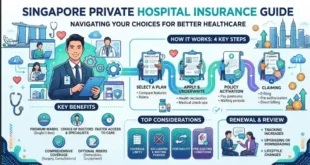
In Singapore, a heart procedure is usually covered in two layers: MediShield Life pays first for the basic ward and standard treatment, and your Integrated Shield Plan or employer plan picks up the rest — but only up to your plan’s limits. A private angioplasty can be far more expensive than the subsidised route, so the gap you pay yourself is the number that matters.
That gap isn’t fixed. It moves with three things: the ward class you choose, whether your surgeon is on your insurer’s panel, and how much of the bill is a “reasonable and customary” charge rather than a premium one.
Ask for the pre-authorisation letter before admission, not after. If the hospital can’t confirm the panel status in writing, you’re in the private billing track, and the shortfall lands on you.
This guide shows what each layer covers, the waiting periods, and the questions to ask before you sign anything.
How heart cover works here
Heart treatment cover in Singapore sits on top of a national scheme, not instead of it. MediShield Life is run by the Central Provident Fund Board and covers everyone, including people with existing conditions. It pays for subsidized hospital care and selected outpatient treatments, with claim limits and a deductible. An Integrated Shield Plan, sold by private insurers, adds a higher ward class and private hospital care on top.
People use it for angioplasty, bypass surgery, pacemaker implants, and stent procedures. It’s also for the scans and follow-up visits that come before and after.
The common misconception is that a Shield plan pays everything. It doesn’t. Each plan has a deductible you pay first, a co-insurance share after that, and annual limits. The rest is yours.
Getting your heart treatment covered in Singapore
The work is mostly paperwork and timing, and it starts before you feel unwell. Do these in order.
- Check your current cover. Log in to CPF to see your MediShield Life status, then find your Integrated Shield Plan policy document. Note the ward class, the annual limit, and the deductible.
- Note the waiting period. Most Integrated Shield Plans exclude heart conditions for the first 12 months. If you bought your plan less than a year ago, that clock is still running.
- Disclose your history honestly. List every heart condition, medication, and past test result. A non-disclosure gives the insurer grounds to reject a claim later.
- Ask about the rider. An insurer’s rider cuts your deductible and co-insurance, but you pay a higher premium.
- Get a pre-authorization before a planned procedure. Call your insurer, give the hospital and doctor, and get written confirmation of what’s covered.
- Keep every receipt and discharge summary. File the claim within your insurer’s deadline, usually 30 to 90 days after discharge.
- For emergencies, go to the hospital first. Call the insurer within the next working day.
The one judgement call is the ward class. Choosing a lower class than you can afford keeps your premium stable for decades; choosing the top class feels safe now but gets expensive fast as you age.
Key numbers at a glance
These are the figures people come back for. Always confirm the exact current amounts in your own policy document, because insurers revise them.
| Situation | What to use | How long | What to watch for |
|---|---|---|---|
| Subsidized public hospital, B2 or C ward | MediShield Life | Claim within 30-90 days of discharge | Deductible and co-insurance still apply |
| Private hospital, planned angioplasty | Integrated Shield Plan plus rider | Pre-authorization before admission | Rider premiums rise with age |
| First year of a new Shield plan | Waiting period applies | 12 months for most heart conditions | A claim in month 6 may be rejected |
| Emergency heart attack | Any hospital, then claim | Notify insurer next working day | Keep the A&E and discharge papers |
| Employer group plan | Company insurer first | Per company policy | Cover ends when you leave the job |
| Follow-up cardiology visits | Shield outpatient benefit if included | Per visit, yearly cap | Not all plans cover outpatient care |
| Pre-existing heart condition | MediShield Life only | No waiting period | Private plans usually exclude it |
What good claims look like
Experienced claimants prepare before the hospital, not after. They keep a folder with the policy number, the pre-authorization letter, and the doctor’s memo. When the bill arrives, they check that the ward class charged matches the class their plan covers. A mismatch is the most common reason a claim gets trimmed.
They also work in a set order. Pre-authorization first, admission second, claim submission third. Skipping the first step is what turns a clean claim into a long argument.
Partway through, they check the running total against the annual limit. If a procedure is likely to push past it, they ask the hospital about a lower ward class or a subsidized route.
What they leave alone is the small stuff. Chasing a small outpatient receipt through three phone calls costs more in time than it returns.
The mistake that costs the most
Not disclosing a past heart test. A stress test from five years ago that you forgot to mention is enough for an insurer to void the claim. You then pay the full bill yourself.
The detail people miss
The rider premium. It looks cheap at 35 and gets steep at 65. Budget for the whole arc, not the first year.
When a claim goes wrong
The table below matches what you notice to what it usually means and the first thing to do.
| What you notice | What it usually means | What to do first |
|---|---|---|
| Claim rejected for a heart condition | Waiting period not yet finished | Check your policy start date, then appeal in writing |
| Claim paid but much less than the bill | Deductible and co-insurance applied | Ask for the breakdown in writing |
| Insurer asks for more documents | Missing discharge summary or test results | Send the full set within their deadline |
| Cover refused at application | Pre-existing condition declared | Ask about MediShield Life and subsidized care |
| Premium jumped at renewal | You crossed an age band | Compare riders before dropping cover |
The rules that apply
MediShield Life is administered by the Central Provident Fund Board, and its claim limits, deductibles, and covered treatments are published there. Integrated Shield Plans are regulated by the Monetary Authority of Singapore, which sets the rules insurers must follow on disclosure, fair dealing, and claim handling. If an insurer rejects your claim, you can raise it with the insurer’s own dispute resolution channel first, then the Financial Industry Disputes Resolution Centre.
Two limits catch people out. First, a pre-existing heart condition is generally excluded from a new Integrated Shield Plan, though MediShield Life still covers it. Second, if you switch insurers, the new plan’s waiting period starts again.
For anything involving a dispute over a large sum, or a question about whether a non-disclosure voids your cover, speak to a licensed financial adviser or a lawyer. Don’t rely on a forum answer.
After the procedure
Once the bill is settled, keep the paperwork together in one place: the discharge summary, the final bill, the claim reference number, and the insurer’s reply. You’ll need them if a follow-up procedure is claimed against the same condition.
Check your policy once a year, ideally near your birthday, because premiums move in age bands. If you change jobs, confirm when your group cover ends and how that affects your Shield plan.
The sign that your cover needs attention again is a premium notice you didn’t expect, or a new diagnosis your plan doesn’t mention. Read the exclusion list at that point, not later.
When this approach isn’t right
If you have a pre-existing heart condition, a new Integrated Shield Plan usually won’t help — stay on MediShield Life and use subsidized public care instead. If you’re between jobs, a group plan is ending, and you may not pass underwriting for a new one, so check continuity options with the insurer before the last day.
If your procedure is urgent and money is tight, don’t delay treatment to sort out insurance. Go to a public hospital, get treated, and sort the claim afterward. And if your bill is small, paying it yourself may cost less than years of rider premiums.
Frequently asked questions
Does MediShield Life cover heart surgery in Singapore?
Yes. MediShield Life covers heart surgery and selected procedures at subsidized public hospitals, subject to deductibles, co-insurance, and annual claim limits. It covers everyone, including people with existing heart conditions, and there’s no waiting period. Private hospital care at a higher ward class needs an Integrated Shield Plan on top.
How long is the waiting period for heart cover?
Most Integrated Shield Plans exclude heart conditions for the first 12 months from the policy start date. Some insurers use a shorter period for accidents and a longer one for specific conditions. Check your own policy document, because the exact wording and length vary between insurers and plan tiers.
Can I claim for a heart attack in a private hospital?
Yes, if your Integrated Shield Plan covers private hospital care. Get pre-authorization where possible, keep the A&E records and discharge summary, and submit the claim within your insurer’s deadline, usually 30 to 90 days. Without a rider, you still pay the deductible and your co-insurance share.
What happens if I didn’t disclose a heart condition?
The insurer can reject the claim or void the policy for non-disclosure. You would then pay the full hospital bill yourself. If the omission was honest and minor, you can appeal in writing with medical evidence. For anything larger, speak to a licensed financial adviser.
Is it safe to switch insurers with a heart condition?
It’s risky. A new plan applies fresh underwriting and a new waiting period, and a declared heart condition is often excluded or declined. Before switching, confirm in writing what the new insurer will cover. If you can’t get cover, staying on your current plan is safer.
How much does a heart procedure cost in Singapore?
Costs vary widely by hospital, ward class, and procedure, so check the current figures on the Ministry of Health’s hospital bill pages rather than relying on an old number. Subsidized public care costs far less than private care. Your out-of-pocket amount depends on your deductible and co-insurance.
How often should I review my heart cover?
Once a year is enough for most people, ideally when your premium notice arrives. Review sooner if you change jobs, receive a new diagnosis, or your insurer changes the plan terms. Premiums rise in age bands, so an annual check keeps surprises small and gives you time to adjust.