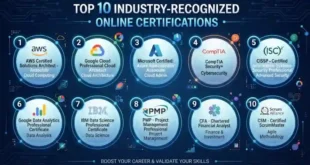
The 10 best online healthcare certifications provide a direct path to career entry by focusing on high-demand, short-term training programs. These credentials include roles like Certified Nursing Assistant, Phlebotomy Technician, Medical Billing and Coding Specialist, Pharmacy Technician, and EKG Technician, alongside specialized options like Medical Administrative Assistant, Patient Care Technician, Clinical Medical Assistant, Sterile Processing Technician, and Home Health Aide. Choosing the right path depends on your local labor market and the specific entry requirements for facilities in your region.
10 Best Online Healthcare Certifications Compared
Selecting the right certification requires balancing your time, your budget, and the specific duties you want to perform.
| Method | How long | Effort | Cost | Best for |
|---|---|---|---|---|
| Administrative | 3-6 months | Low | Low | Office roles |
| Clinical Support | 6-12 months | Medium | Medium | Patient care |
| Technical/Billing | 4-9 months | Medium | Low | Data/Logistics |
If you have limited time, administrative roles are the fastest way to start. If you want direct patient interaction, clinical support roles are better but require more training time. This varies by model—check the label on the course curriculum to see if clinical hours are included.
A common mistake is choosing a program based solely on price. A cheaper, non-accredited course often costs you more in the long run because employers will reject the credential, forcing you to pay for a second, legitimate certification.
Use this decision rule: If your goal is a hospital setting, prioritize programs with at least 40 hours of hands-on clinical rotation. If you prefer remote work or data management, prioritize billing and coding certifications that emphasize software proficiency. Always verify that your chosen program is accredited by a recognized national body to ensure your certificate holds value in the job market.
Specialized administrative training programs
Administrative certifications focus on the business and organizational side of healthcare. These roles are essential for keeping clinics and hospitals running smoothly.
- Register for an accredited program focusing on Medical Administrative Assisting or Billing and Coding.
- Complete the required coursework, which typically takes 3 to 6 months depending on your pace.
- Prepare for the national certification exam by reviewing industry-standard terminology and software.
- Schedule your exam through a testing center or via an approved remote proctoring service.
These programs are excellent for those who prefer office environments over direct bedside care. They offer a clear, predictable schedule compared to shift-based clinical work.
A common mistake is choosing a program that lacks national accreditation, which can make it impossible to sit for the required certification exams. Employers look for credentials from organizations recognized by the National Commission for Certifying Agencies to ensure you have met baseline standards. If your program doesn’t list an NCCA-accredited partner, verify their status before paying tuition.
This path isn’t for those who want to perform medical procedures or provide hands-on patient treatment. If you seek patient interaction, look toward clinical roles like phlebotomy or CNA training instead. Use this decision rule: if you prefer data entry and workflow management, pursue administrative certification; if you prefer physical patient care, prioritize clinical licensure.
Clinical support and patient care
Clinical certifications prepare you for roles where you interact directly with patients. These positions require a mix of technical knowledge and interpersonal skills.
- Enroll in a state-approved program for Nursing Assistant or Patient Care Technician training.
- Complete the required clinical hours, which often range from 75 to 150 hours depending on state mandates.
- Pass both the written knowledge test and the hands-on skills evaluation.
- Apply for your state license or certification through the local nursing board or health department.
Most candidates make the mistake of choosing a program based solely on proximity. Instead, prioritize programs that offer clinical rotations in acute care hospitals rather than long-term care facilities. Acute settings expose you to higher-acuity equipment, which makes you a more competitive candidate for future nursing school admissions.
These roles provide a strong foundation for those looking to advance into nursing or other advanced medical fields. They’re highly rewarding for people who enjoy helping others and working as part of a care team. A significant trade-off is the physical demand of the work, which often involves lifting patients and standing for long periods. If you aren’t comfortable with physical labor or frequent bending, this path may not be the best fit for your long-term career goals.
Technical and diagnostic certifications
Technical certifications focus on specialized machinery or specific medical data tasks. These roles are the backbone of diagnostic testing and medication management.
- Select a program for Pharmacy Technician, Phlebotomy, or EKG training.
- Study the specific protocols for the equipment or medication types you’ll handle.
- Complete the practical lab requirements, which may require in-person attendance at a local site.
- Sit for the national certification exam once your coursework and clinical hours are verified.
These roles are ideal if you enjoy technical processes and precision. They often have more stable, predictable workflows than general patient care. If you’re detail-oriented, these certifications provide a high level of job satisfaction.
A common mistake is assuming these programs are entirely virtual. While the theory is online, the board exams require a practical sign-off. If you can’t commit to 40 to 80 hours of in-person clinical rotations, you’ll be unable to sit for the final exam.
Use this decision rule: If you require a remote-only career, choose medical billing or coding instead. If you prefer tactile, hands-on work and can commute to a lab, pursue these diagnostic paths. The cost of ignoring the lab requirement is losing your tuition investment, as the certification body will reject your application without verified clinical hours.
Which one should you use?
If you’re in a hurry, choose a Medical Administrative Assistant certification. These programs are often the shortest and require the least amount of in-person lab time, allowing you to start applying for jobs in as little as three months.
If you’re doing this for the first time, start with a Certified Nursing Assistant program. This role provides the most comprehensive introduction to the healthcare environment, giving you the best perspective on whether you want to pursue clinical or administrative work later.
If you want the best possible result whatever it takes, pursue a Clinical Medical Assistant certification. This is a versatile path that combines administrative duties with clinical skills, making you a top candidate for almost any doctor’s office or clinic. You gain a wider range of skills, which increases your value to employers and gives you more flexibility in your future career.
The main trade-off is between the speed of entry and the depth of your clinical skills. Faster programs get you working sooner, but they limit the range of tasks you’re qualified to perform. Longer, more technical programs require more effort upfront but often lead to higher starting positions and better pay in the long run.
The rules that apply whichever way you choose
Regardless of the certification you choose, you must ensure your program meets the standards set by your state’s health department or professional board. Before you pay for any course, verify that the curriculum aligns with the requirements of your state, as these rules vary widely across the country.
Always prepare by checking the accreditation status of the school. If a program isn’t accredited by a recognized national body, your certificate may not be valid for employment. During your studies, check your progress against the exam blueprint provided by the certifying agency. This tells you exactly which skills or topics you must master to pass.
At the end of your course, you’ll typically need to pass a national or state-level exam. This usually requires a separate registration and fee. If your certification requires a state license, you must also submit a background check and proof of your training hours to the state board. This process carries legal weight; providing false information can lead to the permanent denial of your license.
If you’re unsure about the specific legal requirements for your state, contact your local Board of Nursing or Department of Health directly for guidance. A common mistake is assuming a national certification automatically grants you the right to practice in every state. It does not. If you plan to move, check for reciprocity agreements between your current state and your destination. If no agreement exists, you’ll likely need to re-apply for licensure. When in doubt, follow the rule of the state where you physically perform the work, not where your employer is headquartered.
Frequently asked questions
Can I get a healthcare certification online?
Yes, many healthcare certifications allow you to complete the theory and coursework entirely online. While some programs require in-person labs for hands-on skills like phlebotomy or EKG, the study portions are fully digital. Always verify the specific requirements of your chosen program to see if they offer local testing or if you need to travel to a partner site.
How long does it take to get certified?
Most healthcare certifications take between 3 and 12 months to complete. Administrative roles are usually on the shorter end, while clinical or technical roles take longer due to required lab hours. Your actual time depends on whether you study full-time or part-time and how quickly you complete your clinical rotations.
Is it safe to use online certification programs?
Yes, it’s safe as long as you choose programs that are accredited by national or state boards. Check the school’s reputation and ensure they’re recognized by professional organizations before you pay any fees. Avoid programs that offer “instant” certification, as legitimate healthcare credentials always require real study and testing.
What happens if I fail the certification exam?
Most certifying bodies allow you to retake the exam after a waiting period. You’ll usually have to pay an additional fee for each attempt. Check the specific policies of your testing agency, as some limit the number of times you can attempt the test within a certain timeframe.
How do I know if a program is legitimate?
A legitimate program will clearly list its accreditation status and the national board that recognizes its curriculum. You can check the official website of the regulatory body for your specific field to see a list of approved training providers. Never trust a program that doesn’t provide clear information on its credentials.
Final Thoughts
Starting a new career in healthcare is a rewarding goal, and these programs make it easier to get there. You shouldn’t wait to begin your journey. Reach out to a local community college or an accredited online provider today to see which enrollment window fits your schedule best. You’ve got a bright future ahead.