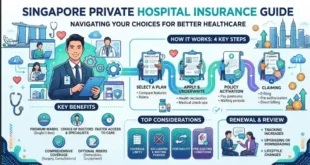
Singapore medical bills: insurance and out-of-pocket costs are managed through a tiered system where the government, private insurance, and personal savings combine to cover expenses. Residents typically pay a portion of their hospital bills using their Central Provident Fund (CPF) MediSave account, while private insurance can bridge the gap for higher-end care. This guide explains how to navigate these financial components to manage healthcare spending effectively.
How Singapore medical bills and insurance work
Healthcare in Singapore operates on a co-payment model designed to prevent over-consumption of medical services. When you receive treatment, you’re expected to pay a part of the bill out-of-pocket to ensure you have a personal stake in your health decisions. This system is supported by the 3Ms: MediSave, MediShield Life, and MediFund. MediSave is a mandatory medical savings account, MediShield Life is a basic health insurance plan for large hospital bills, and MediFund acts as a safety net for those who can’t afford their remaining costs.
Many people mistakenly believe that having insurance means all medical costs will be zero. In reality, almost all policies in the country include a deductible and a co-insurance component. The deductible is the amount you pay before your insurance starts, and co-insurance is the percentage of the remaining bill you must pay. You can verify your specific coverage limits and eligibility for government subsidies by checking the Ministry of Health Singapore official resource page. If you choose private medical care, you must account for higher out-of-pocket costs compared to public ward stays.
Managing Your Hospital Bills
- Check your ward eligibility: Public hospitals offer classes from A to C. Classes B2 and C receive higher government subsidies, but they have more beds per room and shared facilities.
- Verify insurance coverage: Before any planned procedure, call your insurer to confirm if the hospital and the specific treatment are on your “panel” or approved list.
- Use MediSave: Ensure your MediSave account has sufficient funds to cover the withdrawal limits set for your specific surgery or treatment type.
- Estimate costs: Use the hospital’s online price estimator tool to see how much of the bill is likely to be covered by subsidies and how much you’ll pay.
- Review the final invoice: Always ask for an itemized bill. If a charge seems wrong, ask the hospital billing department to explain the line item before you pay.
- Request a payment plan: If you can’t pay the full amount at once, ask the hospital for an installment plan rather than using a high-interest credit card.
The critical decision is choosing your ward class. If you choose a private hospital or a Class A ward in a public hospital, you lose most government subsidies. If you choose a Class C ward, you get the highest subsidies, but you have less privacy.
Key Financial Factors in Healthcare
| Situation | Payment Source | Typical Out-of-Pocket | What to Watch For |
|---|---|---|---|
| Public Class C | Gov Subsidy/MediSave | Very Low | Long wait times |
| Public Class A | Private Insurance | Moderate | Higher co-payment |
| Private Hospital | Private Insurance | High | Annual policy limits |
| Day Surgery | MediSave/Insurance | Low | Procedure caps |
| Emergency Care | Cash/MediSave | Variable | Immediate payment terms |
When choosing between Class C and Class A public wards, the primary decision rule is your tolerance for elective wait times. Class C wards often involve delays of several weeks for non-urgent procedures, whereas Class A wards typically grant access within days.
Many patients mistakenly prioritize the lowest immediate premium without checking their policy’s “pro-ration factor.” If you choose a private hospital but your plan only covers public rates, you could be liable for 30% or more of the total bill.
Always check your “Annual Limit” before scheduling elective surgery. If your cumulative claims for the year have already reached 80% of your policy ceiling, a single complex procedure could exhaust your remaining coverage. In that case, pivot to a public facility to preserve your insurance buffer for potential long-term recovery needs.
Balancing Quality and Cost
Experienced patients know that the best way to control costs is to ask about “generic” medications instead of brand-name ones. These drugs have the same active ingredients and safety standards but often cost significantly less. When you prepare for a procedure, always ask your doctor if there’s a more cost-effective alternative that provides the same clinical outcome.
Don’t wait until the day of your surgery to discuss finances. If you’re having a non-emergency procedure, ask for a financial counseling session with the hospital staff. This helps you avoid “bill shock” when you’re discharged. Many people make the mistake of assuming their “full coverage” insurance will pay everything. However, if you go to a hospital outside your insurer’s network, you may be responsible for a much larger share of the bill than you expected. Always check the network status of your chosen facility first.
Common Billing Discrepancies
| What you notice | What it usually means | What to do first |
|---|---|---|
| Unexpected facility fee | Non-covered service | Ask for a breakdown |
| High medication cost | Brand-name drug used | Request generic alternative |
| Insurance claim denied | Pre-authorization missing | Call your insurer |
| Duplicate testing | Inefficient workflow | Query the attending nurse |
Most patients assume these bills are final, but errors occur in roughly 10% of hospital invoices. A common mistake is paying the “total due” before reviewing the itemized statement. This costs the average patient hundreds of dollars in unnecessary fees.
If your bill includes a facility fee, check if you were in an outpatient department. If the facility is hospital-owned, you may be charged a surcharge that doesn’t apply to independent clinics.
When you see duplicate tests, compare the timestamps. If the provider claims the tests were medically necessary, demand the specific clinical notes justifying the repeat procedure. If they can’t produce documentation, request a formal adjustment to your account balance.
Regulatory Limits and Coverage
The government regulates hospital billing through the Ministry of Health (MOH). There are strict caps on how much you can withdraw from your MediSave account for specific treatments to ensure the funds last for your old age. If you need a procedure that costs more than the MediSave withdrawal limit, you must pay the difference in cash or through private insurance.
Most patients make the mistake of assuming their MediSave balance covers the full bill. In reality, withdrawal limits are procedure-specific; for instance, a daily limit applies to inpatient stays, while surgical tables cap costs per operation. If your hospital bill exceeds these tables, you’re personally liable for the remaining balance.
If you encounter financial hardship, you aren’t left alone. The government provides MediFund, a budget set aside for those who have exhausted all other means of payment. To qualify, you must undergo a means-testing process where your family income, assets, and support system are reviewed.
This isn’t a substitute for insurance, but it serves as a final safety net for the most vulnerable. Always keep your insurance policy documents updated and accessible so you know exactly which treatments are covered before you admit yourself to the hospital.
Long-term Care Maintenance
Once your initial treatment is finished, focus on keeping your insurance active. If you let a policy lapse, you may lose your “no-claims” discounts or find that new policies exclude your previous medical conditions. Review your coverage every two years or whenever you have a major life change, such as getting married or having children.
If you have a chronic condition, ensure you’re on a “chronic disease management program.” This allows you to use your MediSave to pay for recurring outpatient visits and medications. Managing these costs early prevents them from ballooning into a large hospital bill later.
Many patients make the mistake of waiting until a crisis to check their coverage limits. This oversight often costs thousands in out-of-pocket expenses for treatments that would have been covered under a proactive plan.
If you’re unsure if you’re eligible for specific subsidies, log in to the official health portal using your Singpass to view your current status. If you earn below the median income, check specifically for the Community Health Assist Scheme status. If you see a blue or orange card indicator, you qualify for higher tier subsidies.
When to Seek Alternative Care
This approach isn’t for everyone. If you have a complex condition that requires highly specialized equipment or a specific surgeon, a public hospital may not be the right choice. In these cases, you should seek a private specialist. However, you must be prepared to pay higher premiums and out-of-pocket costs. If you’re a foreigner or a non-resident, the government subsidies mentioned above don’t apply to you. You should rely entirely on international private medical insurance or personal savings, as your costs will be significantly higher than those for citizens or permanent residents.
Can I use my MediSave for my family?
Yes, you can use your MediSave to pay for the hospitalization and certain outpatient treatments of your spouse, children, parents, and grandparents. However, the withdrawal limits still apply to the specific treatment, and you must ensure you have enough remaining in your account for your own future needs.
What happens if I go to a hospital not in my insurance network?
You’ll likely face a higher co-payment or a lower reimbursement rate from your insurer. Most policies penalize you for choosing “out-of-network” providers, meaning you’ll pay more out-of-pocket than if you had stayed within the approved list of hospitals and clinics.
How do I know if my insurance is enough?
You should check your annual policy limit and your co-insurance percentage. If your annual limit is low, a single major surgery could exhaust your coverage, leaving you to pay the rest.
Is it safe to skip insurance if I am young?
No, it isn’t recommended to skip insurance even if you’re young and healthy. Medical costs in the country can be extremely high, and an unexpected accident or illness could wipe out your savings. Having basic coverage protects your financial future against these unpredictable events.
How long does a MediFund application take?
You must provide proof of income, household expenses, and other financial commitments to the medical social worker at the hospital. They will then assess your eligibility for the subsidy.
Managing your healthcare finances is a process of balancing your current budget with your long-term health needs. By understanding your insurance policy, utilizing government subsidies, and choosing your care providers wisely, you can protect your savings while ensuring you receive the treatment you need.