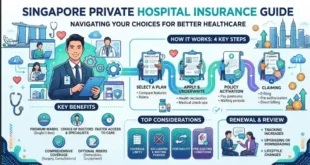
You should contact your insurance provider at least 3 days before a planned procedure to complete the singapore hospital pre-authorization for insurance claims process. This step confirms that your medical coverage applies to the specific treatment, preventing unexpected out-of-pocket costs after you leave the facility. Completing this early ensures the insurer has time to review your doctor’s referral and verify that the hospital is within your plan’s network.
Required insurance authorization documents
You must have your paperwork organized before you arrive at the hospital to avoid delays. Keep these items in a secure folder so you can present them quickly at the admissions desk.
| Item | How much | Why it’s needed | A substitute |
|---|---|---|---|
| Medical referral | 1 original copy | Confirms medical necessity | none — don’t swap this |
| Insurance card | 1 physical card | Proves active coverage | Digital member portal screenshot |
| Identification | 1 government ID | Verifies patient identity | Passport or birth certificate |
| Treatment plan | 1 detailed document | Outlines total costs | Itemized doctor’s estimate |
| Pre-auth form | 1 signed document | Authorizes the insurer | none — don’t swap this |
Many patients mistakenly assume their doctor’s office automatically forwards these files to the insurer. This assumption often costs you an extra 24 to 48 hours of processing time while the hospital staff manually requests missing data.
Check your insurance portal one week before your procedure. If you see a “pending” status on your pre-authorization, call your provider immediately. If the status is “approved,” print the confirmation number. If it remains “pending,” you must bring a printed copy of your clinical notes to the hospital. Without those notes, the admissions desk may force you to reschedule your surgery entirely.
Preparing for hospital admission
Confirm your policy status by calling the number on the back of your insurance card to ensure your premiums are fully paid. Do this at least three business days before admission.
Check your specific policy coverage limits for the upcoming year, as these values reset annually and vary based on your plan tier. If you have already met your deductible, you should see lower out-of-pocket costs.
Ask your doctor’s office to submit clinical notes directly to the insurer. This is the preparation step most people skip, and it’s the primary reason for claim denials. Without this documentation, insurers often categorize elective procedures as “not medically necessary.”
Use the decision rule: if your plan is an Integrated Shield Plan, confirm if your insurer covers the co-payment portion or if you must pay that out-of-pocket.
If your procedure requires a stay in a private room, verify your eligibility for that specific ward type. Choosing a higher tier without authorization can lead to significant personal charges that insurance will refuse to cover.
Singapore Hospital Pre-Authorization for Insurance Claims: Steps to Secure
- Obtain a formal letter of referral from your primary doctor that lists your diagnosis and the exact procedure code required.
- Provide this referral to your insurance company’s portal or agent to initiate the request for a Letter of Guarantee (LOG).
- Wait for the insurer to issue the LOG, which usually takes 3 to 5 business days depending on the complexity of the medical case.
- Submit the approved LOG to the hospital’s business office at least 24 hours before your scheduled admission time for final verification.
- Pay any required co-payment or deductible amount to the hospital cashier before your discharge to clear your account balance completely.
- Request an itemized final bill from the hospital billing department to ensure all charges match the approved pre-authorization list exactly.
- Verify that the hospital has successfully transmitted the final claim documents to your insurer to close the open case file.
- Keep copies of all signed forms and the final receipt for your personal financial records in case of future billing disputes.
Signs of successful authorization
A successful pre-authorization is confirmed when you receive a Letter of Guarantee (LOG) from your insurer that explicitly lists the approved procedure and the maximum coverage amount. If you don’t have this document in hand before admission, you must assume you’re responsible for the full bill. Check the document for the specific dates of coverage and the names of the authorized medical providers. If the document shows a “pending” or “under review” status, you must contact your insurer again immediately.
The most common mistake is assuming that a verbal “okay” from a hospital clerk constitutes authorization. This oversight costs patients thousands in unexpected out-of-pocket fees. Always demand a physical or digital copy of the LOG.
If the authorization is denied, you’ll receive a formal notification explaining why the treatment isn’t covered under your current policy. In this case, you should ask your doctor for a revised treatment plan or consider paying out-of-pocket and filing a reimbursement claim later.
Note that the final bill may vary slightly from the estimate if the doctor performs additional tests during the surgery that weren’t part of the original, pre-authorized plan. If the procedure changes mid-operation, ensure your doctor documents the medical necessity for those extras to support your future claim.
Troubleshooting common insurance issues
| What happened | Why | What to do |
|---|---|---|
| LOG not received | Processing delay | Call insurer immediately |
| Coverage denied | Policy exclusion | Request appeal form |
| Incorrect ward | Plan mismatch | Upgrade your policy |
| Higher deductible | Plan change | Pay hospital directly |
| Missing signature | Clerical error | Visit doctor’s office |
If your Letter of Guarantee (LOG) is missing, don’t wait more than 48 hours. Delays often stem from incomplete patient data entry at the hospital reception desk. If you wait too long, the hospital may demand a cash deposit.
When coverage is denied due to an exclusion, check your policy’s “General Exclusions” page first. If the condition was pre-existing but not disclosed, an appeal will likely fail. However, if the denial cites a “non-covered procedure,” ask your doctor to write a letter of medical necessity.
For deductible issues, always verify your plan’s “Out-of-Pocket Maximum” before paying. If you have already hit this limit for the year, you shouldn’t be paying anything. Present your previous receipts to the billing department to trigger a refund of the overage. Never pay a bill without first comparing the invoice line items against your Explanation of Benefits document.
Understanding your coverage interval
You should initiate this process at least 7 days before any non-emergency surgery to account for administrative processing times. The interval is primarily moved by the complexity of the procedure and the specific requirements of your insurance provider. If you’re undergoing a minor, low-cost procedure, the insurer might approve the request within 24 hours. Conversely, complex surgeries requiring specialized equipment or long hospital stays often trigger a deeper clinical review, which can extend the approval time by an additional week.
Always check your specific policy document for the “pre-authorization lead time” requirement, as this is the single value that varies by provider and plan type. Don’t rely on verbal promises from hospital staff; if the written LOG doesn’t arrive by the 48-hour mark before your admission, you must call your insurer to escalate the request.
The most common mistake is assuming that “urgent” status automatically bypasses clinical review. It does not. If your surgeon labels a procedure as urgent, the insurer still requires a clinical justification sent via fax or portal. If they lack this documentation, they will deny the request regardless of the surgery date.
Use this decision rule: If the procedure involves anesthesia or an overnight stay, assume the 7-day window is mandatory. If you’re paying out-of-pocket, you can ignore the pre-authorization interval entirely, but you must confirm the facility’s cash-pay rate in writing to avoid surprise billing.
Frequently asked questions
Can I get pre-authorization for emergency care?
Emergency care doesn’t require pre-authorization because the priority is your immediate health, but you must notify the insurer within 24 hours of admission. Most policies allow for retroactive authorization if you provide proof of the emergency from the attending physician. Contact your insurer’s 24-hour emergency hotline as soon as you’re stable to ensure the hospital billing department can begin the claim process.
Why was my pre-authorization request rejected?
Rejection usually occurs because the procedure isn’t covered under your specific plan or the medical documentation provided by your doctor was incomplete. Review the denial letter for the specific reason, which will cite the clause in your insurance contract that wasn’t met. You can often resolve this by asking your doctor to provide more detailed clinical evidence or by selecting an alternative treatment that your policy covers.
How long does a letter of guarantee stay valid?
A letter of guarantee is typically valid for the duration of the hospital stay specified on the document, usually between 7 and 30 days. If your procedure is postponed, you must contact your insurer to update the dates on the letter. Using an expired letter of guarantee will result in the hospital rejecting your insurance claim, leaving you to pay the full bill yourself.
Is it safe to proceed without a letter of guarantee?
It isn’t safe to proceed without a letter of guarantee unless you’re prepared to pay the entire hospital bill upfront. Without this document, the hospital has no proof that your insurer will pay, so they will require a large cash deposit before admission. Only proceed without one if you have confirmed that your specific policy allows for reimbursement claims after the procedure is finished.
What happens if the final bill exceeds the authorized amount?
You’re responsible for paying any amount that exceeds the limit stated in your letter of guarantee directly to the hospital. This often happens if the surgery takes longer than expected or if the doctor uses additional supplies not included in the original estimate. Ask the hospital billing office for a breakdown of these extra charges to verify they’re legitimate before making your payment.
Does it matter if the hospital is out-of-network?
It matters significantly because using an out-of-network hospital often reduces your coverage percentage or invalidates the pre-authorization process entirely. Check the list of panel hospitals provided by your insurance company before scheduling your appointment. If you choose an out-of-network provider, you’ll likely need to pay the costs yourself and then file a claim for partial reimbursement later, which rarely covers the full amount.
Singapore Hospital, in short
Managing your healthcare finances is a vital part of your recovery, so keep all correspondence with your insurer and the hospital billing department in one place. If you ever feel uncertain about a charge, request a detailed statement of account from the hospital finance office and compare it against your insurance coverage handbook.