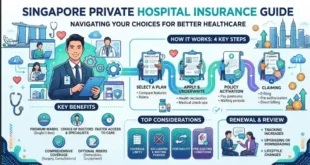
Hospital care in Singapore is priced by ward class and by whether you’re a citizen, permanent resident, or foreigner. A subsidised B2 or C ward costs citizens a few hundred dollars a day after subsidy, while a private single room runs into the thousands per day before doctor fees. This guide covers the ward classes, the bills that arrive separately, insurance and MediSave, and the numbers to check before you’re admitted.
What hospital costs in Singapore really mean
Hospital cost here isn’t one bill. It’s a set of charges added together: the daily ward charge, doctor fees, medicine, tests, and surgery if you need it. The ward class you choose decides how much of that the government subsidises, and how much you pay yourself.
Singapore’s public hospitals run from Class C (most subsidised, open ward) up to Class A (single room, no subsidy). Private hospitals sit above that. Citizens get the highest subsidy, permanent residents get less, and foreigners get none.
The common misconception is that your ward class only changes your room. It also changes who treats you. In a subsidised ward, a hospital doctor sees you and the team can rotate. In Class A or a private hospital, you pick your doctor — and you pay that doctor’s own fees on top.
The Ministry of Health (MOH) publishes subsidy rates and typical bill sizes for each class, so you can check the current figures yourself before you decide.
How to estimate your hospital bill
- Find your residency status first. Citizen, PR, and foreigner pay different rates for the same ward. Subsidies apply to citizens and, at a lower level, to PRs. Foreigners pay the full unsubsidised rate.
- Pick a ward class. Class C and B2 are heavily subsidised for citizens. B1 and A get less or none. Private hospitals get no subsidy at all.
- Add the daily ward charge. This covers the bed, nursing, and meals. It runs from a small subsidised amount per day up to several hundred dollars per day in Class A.
- Add doctor fees separately. In a public subsidised ward, doctor fees are part of the subsidised bill. In Class A or private, the specialist bills you directly.
- Add the procedure. Surgery, scopes, and imaging are charged on top. Ask for an itemised estimate before you agree to the procedure.
- Add medicine and tests. Lab work, scans, and drugs are billed as used. These can add hundreds to thousands depending on your case.
- Check what insurance and MediSave will cover. MediSave can pay part of the bill for approved treatments. Your Integrated Shield Plan or employer plan covers the rest, up to its limits.
The single judgement call that decides your final bill is ward class. Two patients with the same surgery can pay very different amounts purely because one chose a subsidised ward and the other chose a private room.
If your treatment needs a specialist procedure, ask the hospital’s medical social worker or billing office for a pre-admission estimate. They handle this properly, and it’s free.
Costs and settings at a glance
Use this as a rough map. Exact rates change, so confirm the current numbers with MOH or the hospital’s billing office before you’re admitted.
| Situation | What to use | How long | What to watch for |
|---|---|---|---|
| Citizen, minor illness | Class C or B2 ward | A few days | Long wait for a bed; team doctors, not your choice |
| Citizen, planned surgery | Class B1 or A | 2–5 days | Higher daily charge; doctor fees may be separate |
| PR, any treatment | Subsidised ward (lower rate) | Varies | Subsidy is less than for citizens |
| Foreigner, any treatment | Private or Class A | Varies | No subsidy; full rate applies |
| Short stay, day surgery | Day surgery centre | Same day | Cheaper than overnight; check what’s included |
| Private hospital, single room | Private hospital | Varies | Highest cost; you pay doctor fees directly |
What separates a smooth bill from a shock
The people who avoid bill shock do one thing early: they ask for the estimate in writing before they’re admitted. Not a verbal “roughly this much” — an itemised pre-admission estimate that lists the ward charge, the doctor fee, and the procedure separately.
They also confirm their ward class in advance. Changing class after admission is harder, and you may be moved to wherever a bed is free. If you want a specific class, say so when you book.
Before you’re admitted
Check your insurance and MediSave limits first, then choose the ward class you can actually cover. Keep your admission letter, your estimate, and your insurance policy number in one place. Tell the billing office which insurer you’re using so they can process the claim.
During and after your stay
Ask for an itemised bill, not just a total. Read it line by line. If something looks wrong, raise it with the billing office before you pay. Keep every receipt — you’ll need them for insurance and MediSave claims.
Common problems and quick fixes
| What you notice | What it usually means | What to do first |
|---|---|---|
| Bill is much higher than the estimate | Extra tests, medicine, or a longer stay | Ask billing for an itemised breakdown |
| Insurance paid less than expected | Ward class or treatment not covered | Call your insurer with the policy number |
| MediSave claim rejected | Treatment or class not approved for MediSave | Check MOH’s MediSave rules for that treatment |
| Doctor fee billed separately | You were in Class A or private | Confirm the fee schedule with the clinic |
| Can’t pay the full amount | Bill exceeds your savings | Ask to speak to a medical social worker |
The rules and limits that apply
Subsidies in public hospitals are set by the Ministry of Health (MOH) and depend on your residency status and ward class. Citizens get the highest subsidy; permanent residents get less; foreigners get none. MediSave can be used for approved treatments, but it has withdrawal limits per day and per procedure — check MOH’s MediSave page for the current figures.
Integrated Shield Plans are regulated by the Monetary Authority of Singapore (MAS), and the coverage terms sit with your insurer. If you’re not sure what your plan pays, ask the insurer directly.
If your bill is more than you can pay, you don’t have to handle it alone. Every public hospital has a medical social worker who can assess you for financial assistance. That’s their job, and it’s free to ask.
Keeping your records in order
Once you’ve paid, keep the itemised bill, the receipts, and the discharge summary together. You’ll need them for insurance claims, MediSave claims, and any follow-up appointments. Most insurers set a claim deadline — often within a set number of days of discharge — so file early rather than late.
Put the whole set in one folder, paper or on your phone. A shoebox of loose receipts is where claims go wrong: you find the bill but not the discharge summary, and the insurer asks for both.
If you’re on a follow-up schedule, note the date of your next appointment and any test results you’re waiting on. Bring your medicine list to every visit so the doctor doesn’t repeat tests you’ve already had.
Recheck your ward class and insurance coverage before any planned admission. Your situation can change, and so can the rates.
When a different approach fits better
This guide isn’t for you if you’re a foreigner without insurance and facing a large procedure. The full unsubsidised rate can be very high, and you should talk to the hospital’s financial office before admission, not after. Ask for the self-pay rate in writing, and ask whether a deposit is required.
It’s also the wrong approach if you’re comparing private hospitals on price alone. Private hospital bills depend heavily on the doctor you choose, so you need each doctor’s own fee schedule. Two surgeons at the same hospital can bill very differently for the same operation.
And if your treatment is urgent or an emergency, don’t stop to compare costs. Go to the nearest emergency department. You can sort out the bill and any assistance afterward.
One more case: if you’re already mid-treatment, switching hospitals to save money usually costs more than it saves. Records have to be transferred and tests repeated. Finish the current course of treatment, then compare for the next one.
Frequently asked questions
Can foreigners get subsidised hospital care in Singapore?
No. Government subsidies apply to citizens and, at a lower level, permanent residents. Foreigners pay the full unsubsidised rate. Some employers provide insurance that covers part of it. Check with your employer’s HR or your insurer before admission.
How long does it take to get a subsidised ward bed?
It varies by hospital and how busy they are. Emergency cases are triaged by urgency, not by class. For planned admissions, you’re usually given a date in advance. Ask the hospital’s admissions office for the current wait in your class.
Is MediSave enough to cover a hospital bill?
Often no, especially for surgery. MediSave has withdrawal limits per day and per procedure, so it usually covers only part of the bill. You’ll need insurance or savings for the rest. Check MOH’s MediSave rules for the exact limits.
What happens if I can’t pay my hospital bill?
Ask to speak to a medical social worker at the hospital. They can assess you for financial assistance schemes and work out a payment plan. This service is free, and it’s better to ask before the bill grows than after.
Why is my private hospital bill higher than a public one?
Private hospitals get no government subsidy, and you pay your chosen doctor’s fees directly. The room, the doctor, and the procedure are all billed at private rates. Public subsidised wards cost far less because the government covers part of the bill.
How do I check the cost before I’m admitted?
Ask the hospital’s billing office for a written pre-admission estimate that lists the ward charge, doctor fee, and procedure separately. For public hospitals, you can also check MOH’s published bill sizes for common conditions.
Does my ward class change what I pay for the doctor?
Yes. In a subsidised ward, doctor fees are part of the subsidised bill. In Class A or a private hospital, the specialist bills you separately at their own rates. Confirm which applies to you before you choose a class.
Conclusion
Comparing ward classes and asking for a written estimate before admission is what keeps a hospital bill manageable. The rates change, so check MOH’s current figures and your own insurance terms rather than relying on any number you saw last year.